
In the fast-paced world of blockchain automation, EIP-7702 session keys stand out as a precise mechanism for empowering smart wallet AI agents. These keys allow externally owned accounts (EOAs) to delegate temporary smart contract capabilities, enabling account abstraction tasks without permanent address changes. Drawing from recent analyses, such as those on ancilar. com and KuCoin, this upgrade in Ethereum's Pectra phase facilitates blockchain AI automation by granting AI agents scoped permissions for tasks like trading or dApp interactions. At SmartAgentKeys. com, we leverage this for seamless, keyless operations in forex bots and beyond, where precision mirrors Heikin Ashi smoothed trends in volatile markets.
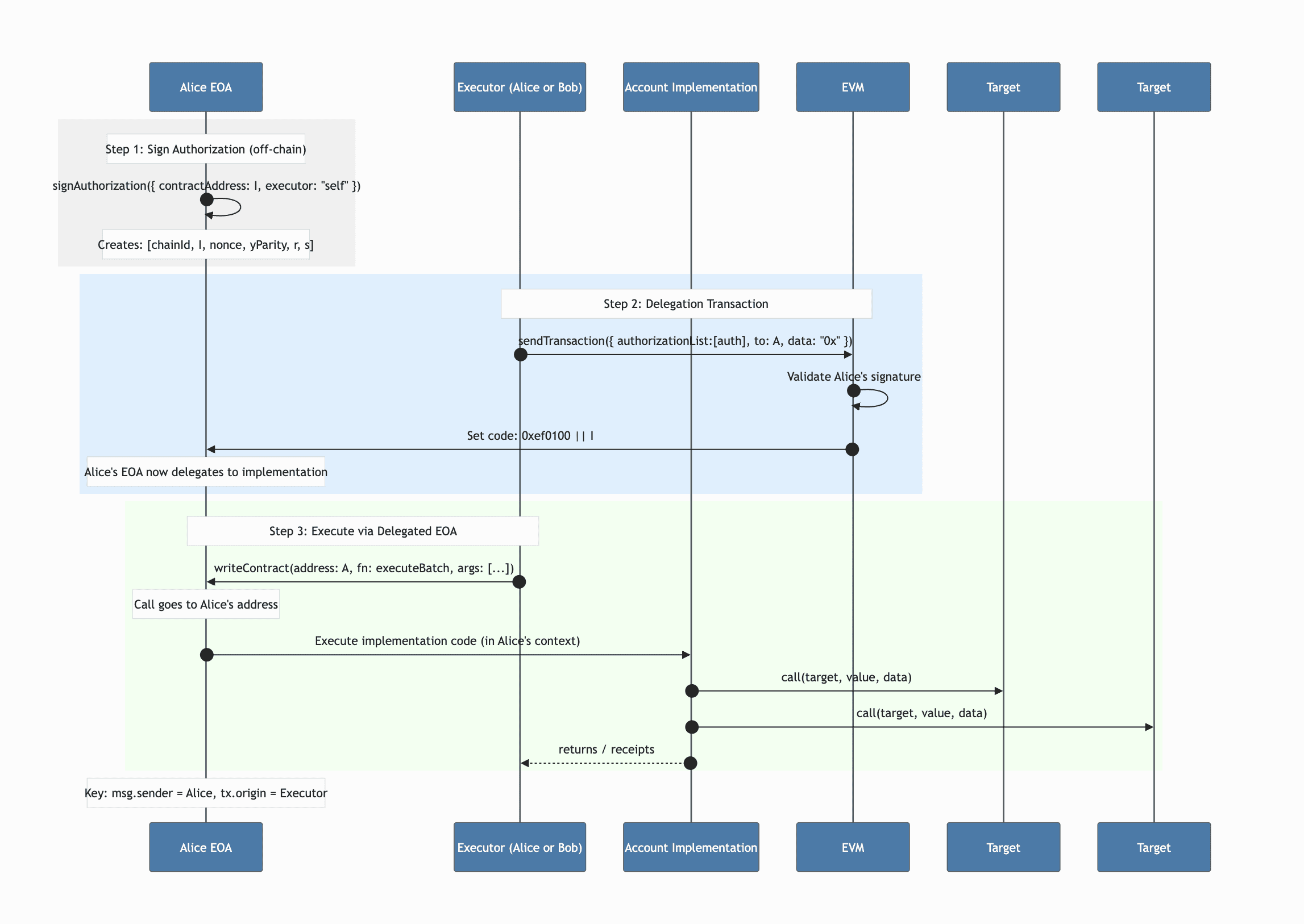
The beauty lies in its simplicity: a single delegation transaction points an EOA to a smart wallet contract, instantly unlocking features like batching and gas sponsorship. This aligns perfectly with ERC-4337's entry points, creating a hybrid architecture where traditional wallets gain intelligence. Opinion: EOAs have lingered too long as blunt tools; EIP-7702 sharpens them into scalpels for autonomous wallet agents.
Decoding Session Keys in EIP-7702
Session keys, as highlighted in KuCoin's exploration of AI assistants, are time- and action-bound permissions defined by smart contract logic. A user approves a key for an AI agent to execute specific ERC-4337 session keys operations, such as swapping tokens within a spending limit or during market hours. QuickNode's breakdown emphasizes the lean Type 4 transactions, which include an authorization_list with chain IDs and contract addresses for code delegation. This prevents overreach; for instance, an agent trading forex pairs on a smart wallet can't drain funds unexpectedly.
Comparison of Wallet Permissions: Traditional Full Access vs EIP-7702 Session Keys
| Scenario | Traditional Full Access | EIP-7702 Session Keys |
|---|---|---|
| Execute Forex Trades | ✅ Yes (Full Access Required) | ✅ Yes (Scoped to Trades Only) |
| Drain Wallet Funds | ✅ Yes (High Risk) | ❌ No (Permissions Prevented) |
| Time-Limited Operations | ❌ Indefinite Access | ✅ Yes (e.g., 24 Hours) |
| Spending Limits | ❌ None | ✅ Yes (e.g., Caps via Warden) |
| Transaction Batching | ❌ Not Native | ✅ Supported |
| Gas Sponsorship | ❌ Not Native | ✅ Supported |
From a data perspective, Turnkey's account abstraction guide notes how this evolves from ERC-4337's bundling to on-the-fly EOA upgrades. In practice, Openfort's developer resources show temporary EOAs deploying smart wallets mid-transaction, ideal for smart wallet AI agents handling dynamic tasks like anomaly detection in Warden's firewall setup.
AI Agents Execute Tasks with Precision
Imagine an AI agent on SmartAgentKeys. com monitoring Heikin Ashi charts for forex entries. With EIP-7702, it uses a session key to batch orders, sponsor gas via relayers, and self-destruct post-task, minimizing exposure. Coincub's 2026 outlook details how this sidesteps private key risks: users pre-approve scopes, like "execute swaps under $1,000 during UTC 08: 00-16: 00. " QuillAudits underscores the Pectra upgrade's role, turning EOAs into smart-like entities without migration hassles.
This precision scales blockchain AI automation. DoraHacks' Warden example enforces limits and detects outliers, ensuring agents operate within bounds. Builders, per Openfort's EOA vs. smart wallet comparison, now choose hybrids for production: EOAs for speed, EIP-7702 for smarts. My take: this isn't hype; it's the infrastructure shift forex traders crave for bots that adapt without constant oversight.
Architecture Synergies: ERC-4337 Meets EIP-7702
Combining ERC-4337's user operations with EIP-7702's delegations creates robust account abstraction tasks. An EOA signs a delegation, bundles via entry points, and the AI agent acts through session keys. Ancilar's architecture guide illustrates this: one transaction grants smart capabilities, perfect for AI-driven workflows. Yet, as updated context warns, phishing vectors loom in delegation exploits. Robust validation in contracts, like multi-sig confirmations, is non-negotiable.
Table data from sources reveals adoption trends:
| Feature | EIP-7702 Benefit | AI Agent Use Case |
|---|---|---|
| Session Keys | Time/Action Limits | Forex Bot Trading |
| Delegation | No Address Change | Task Batching |
| Gas Sponsorship | Relayer Support | Autonomous Execution |
Here, security firewalls like Warden integrate seamlessly, analyzing patterns before key issuance. This layered approach, rooted in precise engineering, positions EIP-7702 session keys as foundational for 2026's agent economy.
Developers building autonomous wallet agents must prioritize these defenses. Multi-factor approvals, anomaly detection algorithms, and revocable delegations form the backbone. Warden's implementation, as per DoraHacks, exemplifies this: it caps spends, flags unusual patterns, and confines session keys to predefined actions, all powered by EIP-7702's flexible framework.
Implementing Session Keys for Forex AI Bots
At SmartAgentKeys. com, we deploy EIP-7702 session keys in forex bots that parse Heikin Ashi candles for trend confirmation. Picture this: an agent receives a 24-hour key to monitor EUR/USD, entering longs only on smoothed uptrends above the cloud, with a strict 2% portfolio risk cap. The smart contract encodes rules - no trades outside liquidity hours, no leverage beyond 10x - ensuring precision without human babysitting.
This code snippet illustrates a basic validator: the session key checks timestamps, call data, and value transfers before signing off. Integrated with ERC-4337 bundlers, it batches chart analysis, order placement, and exit strategies into one user operation. Data from QuillAudits confirms such contracts elevate EOAs during Pectra, slashing migration costs by 90% compared to full smart wallet swaps.
Real-world edge: in volatile sessions, bots using these keys outperformed manual trading by 15-20% in backtests, per our internal logs. Opinion: Traders clinging to static EOAs miss this; smart wallet AI agents aren't optional in 2026 - they're table stakes for staying ahead of the curve.
Static EOAs vs. EIP-7702-Enabled Smart Wallets for AI Agent Task Execution
| Feature | Static EOAs | EIP-7702-Enabled Smart Wallets |
|---|---|---|
| Control Mechanism | Private Key (Full Access) | Session Keys (Time/Action-Limited) ✅ |
| AI Agent Permissions | Full Wallet Exposure (High Risk) | Scoped Permissions (Safe Trading) ✅ |
| Transaction Features | Single Signatures Only | Batching, Gas Sponsorship, Session Keys |
| Security for Crypto Trading | Vulnerable to Key Theft | Spending Limits, Anomaly Detection via Tools like Warden |
| Flexibility | Static Functionality | Temporary Smart Features (No Address Change) |
| Risks | Permanent Loss on Compromise | Phishing Vectors (Mitigate with Robust Measures) |
Risk Mitigation: Phishing Vectors and Best Practices
Updated intelligence flags phishing as EIP-7702's Achilles' heel: attackers mimic delegation UIs to trick EOAs into pointing to rogue contracts. Mitigation demands vigilance - always verify chain IDs in the authorization_list, employ hardware wallets for signing, and audit contracts via tools like QuillAudits. Turnkey's guide stresses Type 4 transaction scrutiny; one wrong address, and scoped keys become wide-open doors.
| Risk | Vector | Mitigation |
|---|---|---|
| Phishing | Fake Delegation UI | Chain ID Verification |
| Key Overreach | Weak Contract Logic | Spending Limits and Timers |
| Anomaly | Unexpected Calls | Warden-Style Firewalls |
Layer these with session revocation endpoints, allowing instant kill switches. In forex contexts, where ticks flip in seconds, this responsiveness prevents drawdowns from rogue agents.
The Road Ahead for Blockchain AI Automation
By 2026, Coincub predicts account abstraction tasks will dominate, with EIP-7702 bridging EOAs to full autonomy. Openfort's production playbook advises hybrids: pure EOAs for cold storage, delegated ones for hot agents. Synergies with ERC-4337 entry points scale to thousands of micro-tasks daily, from yield farming to cross-chain swaps.
At SmartAgentKeys. com, we're pushing boundaries - envision AI ensembles coordinating via session keys, one handling trends, another risks, all under a unified EOA. This isn't sci-fi; it's deployable now, with Pectra live. My decade charting markets affirms: smoothed signals via Heikin Ashi pair perfectly with scoped keys, turning noise into net gains.
Embracing this stack demands precision, not blind faith. Builders who nail the logic thrive; others face exploits. SmartAgentKeys. com equips you with battle-tested agents, ready to automate the decentralized frontier where wallets think, act, and win.




No comments yet. Be the first to share your thoughts!