
What smart agent keys are
Smart agent keys are scoped, temporary credentials that let AI agents access specific blockchain functions without exposing your main wallet. They rely on EIP-7702 and session key standards to grant limited permissions, such as signing a single transaction or interacting with one approved contract.
This approach solves the security bottleneck of static private keys. In a static setup, a single compromised key grants full access to all assets. Smart agent keys isolate risk by setting strict boundaries on what an agent can do, when it can act, and how much it can spend.
For 2026, this distinction is critical as AI agents move from experimental pilots to production workflows. Agents need reliable, automated access to execute tasks like trading or data verification, but doing so with a master key is reckless. Smart agent keys provide the necessary automation while maintaining strict security controls.

Choose your agent wallet
Selecting a wallet for smart agent keys requires matching your security model to the infrastructure. Because these keys often manage automated workflows or high-volume transactions, the wallet must support EIP-7702 or similar session key standards to allow the agent to sign operations without exposing your root private key.
The choice usually falls between self-custody software wallets, hardware security modules, or managed infrastructure providers. Each option offers a different balance of control, cost, and ease of integration.

Compare wallet options
Use this comparison to identify the infrastructure that fits your agent's operational needs. Focus on whether the provider supports the specific session key standards required for your automation.
| Wallet Type | Security Model | EIP-7702 / Session Key Support | Best For |
|---|---|---|---|
| Hardware Wallet | Cold storage, physical confirmation | Limited (requires bridge or specific implementation) | Storing the root key and approving high-value transactions |
| Self-Custody Software | Private key stored on device | Native support (e.g., MetaMask, Rabby) | Direct developer integration and testing |
| Managed Infrastructure | Multi-sig, MPC, or hosted | Often supported via API wrappers | Production agents requiring high uptime and scalability |
| Smart Contract Wallet | Account abstraction, gasless options | Native (built for session keys) | Automated micro-transactions and agent-to-agent interaction |
Secure the root key
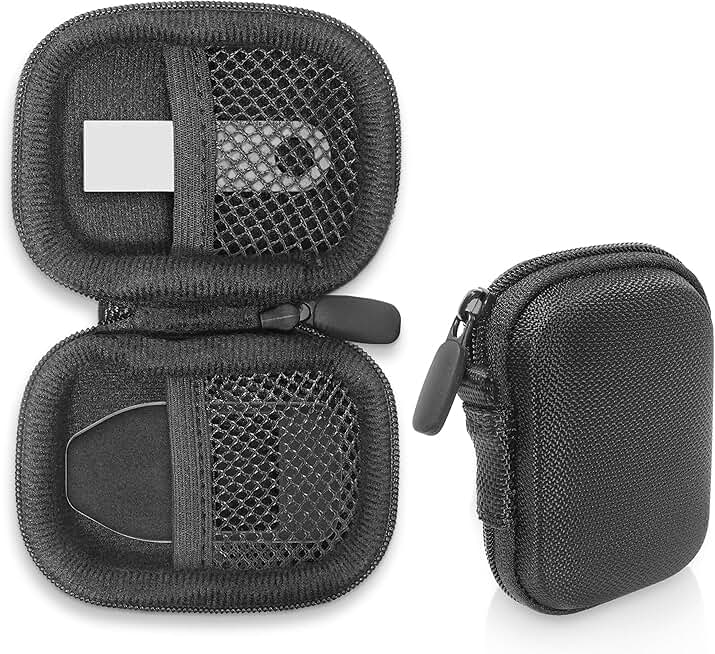
Regardless of the wallet you choose to host the agent's operational keys, your root private key must remain in cold storage. Hardware wallets provide the highest assurance for this layer. They ensure that even if your agent's session keys are compromised, the root authority cannot be drained without physical access to the device.

As an Amazon Associate, we may earn from qualifying purchases.
Generate scoped session keys
Smart Agent Keys works best as a clear sequence: define the constraint, compare the realistic options, test the tradeoff, and choose the path with the fewest hidden costs. That order keeps the advice usable instead of decorative. After each step, pause long enough to check whether the recommendation still fits the reader's actual situation. If it depends on perfect timing, unusual access, or a best-case budget, include a simpler fallback.


Connect your AI agent
To turn a generated smart agent key into actual work, you need to bridge the gap between static credentials and a living framework like LangChain or AutoGen. A key sitting in a vault is just data; an agent framework is the engine that uses that data to execute tasks.
This integration follows a standard authentication flow: the agent retrieves the key, establishes a session, and begins autonomous action. Think of the key as a digital passport and the agent framework as the traveler. Without the passport, the traveler cannot board the plane. Without the framework, the passport is just a piece of paper.
The integration process typically involves three distinct phases: configuration, authentication, and execution. You will configure the agent with the key’s metadata, authenticate the session to prove identity, and then allow the agent to act within its defined permissions.

Load your smart agent key into the agent’s secure environment variables. In frameworks like LangChain, this usually means setting a specific environment variable (e.g., AGENT_KEY_ID) that the framework can read at startup. Ensure the key is stored securely, never in plain text within your codebase. This step sets the stage for the agent to recognize its own identity before it attempts any action.
Create an authentication client instance using your framework’s built-in tools. Pass the key ID and any necessary secrets to initialize a secure session. This client handles the token generation and renewal logic, ensuring that the agent maintains a valid identity even as requests are made over time. This is the handshake that tells the external services, "I am authorized."
Map the authenticated client to specific tools within your agent’s toolkit. For example, if your agent needs to send emails or query databases, bind the key to those specific tool definitions. This ensures that every action the agent takes is signed with the correct credentials. The agent now has the ability to perceive its environment and act upon it using the permissions granted by the key.
Once these steps are complete, your AI agent is ready to operate autonomously. It will use the key to authenticate with external APIs, execute tasks, and report results without requiring manual intervention for every single step. This is the core of agentic AI in 2026: systems that can plan, act, and adapt while maintaining secure, auditable identities.
Monitor and revoke access
Smart agent keys are powerful because they operate autonomously, but that autonomy requires active oversight. You should treat your agent key dashboard like a security camera feed: constant, low-effort monitoring that allows for immediate action when something looks wrong.
Audit agent activity logs
Most smart agent platforms provide a log of every action the key performs. Review these logs weekly to establish a baseline of normal behavior. Look for requests that fall outside the agreed-upon scope, such as an agent attempting to access files it was never granted permission to read.
If you notice unusual patterns—like a sudden spike in API calls or requests from unfamiliar IP addresses—treat this as a red flag. Do not wait for a scheduled audit. Investigate immediately.

Revoke compromised keys
If you detect an anomaly, revoke the key immediately. Revocation is instant and does not require deleting the agent itself; it simply cuts off the specific credential that was compromised. This is the primary security advantage of scoped keys: you can isolate and neutralize a threat without disrupting your entire workflow.
After revoking, rotate the key if you need to restore functionality, but only after you have identified and patched the vulnerability that led to the compromise. Never reuse a key that has been flagged for suspicious activity.
Use scoped permissions
The best way to prevent major breaches is to design keys with the minimum permissions necessary. A key that only reads data cannot accidentally delete it. A key that only writes to a specific folder cannot access your entire database. By keeping permissions tight, you make it much harder for an agent to cause significant damage, even if it is compromised.
Smart Agent Keys 2026 FAQ
Your setup checklist
Smart Agent Keys works best as a sequence, not a scramble through settings. Do the minimum first: confirm compatibility, connect the core hardware, update only when needed, and test the result before adding optional features. That order keeps the task understandable and makes failures easier to isolate. After each step, pause long enough for the interface to finish syncing. Many setup problems are timing problems disguised as configuration problems. If the same step fails twice, record the exact error, restart the smallest affected piece, and retry before moving deeper.
The simplest way to use this section is to keep the setup small, verify each change, and record the stable configuration before adding optional accessories.
No comments yet. Be the first to share your thoughts!