

In the evolving landscape of Ethereum, where EIP-7702 marks a pivotal shift, externally owned accounts (EOAs) gain the ability to temporarily activate smart contract logic. This EIP-7702 EOA upgrade bridges the gap between simple key-based wallets and sophisticated smart accounts, particularly revolutionizing how AI agents interact with blockchains. Imagine an AI agent handling portfolio rebalancing without forcing users to abandon their familiar EOA addresses; that's the promise here, delivered through the Pectra upgrade in May 2025.
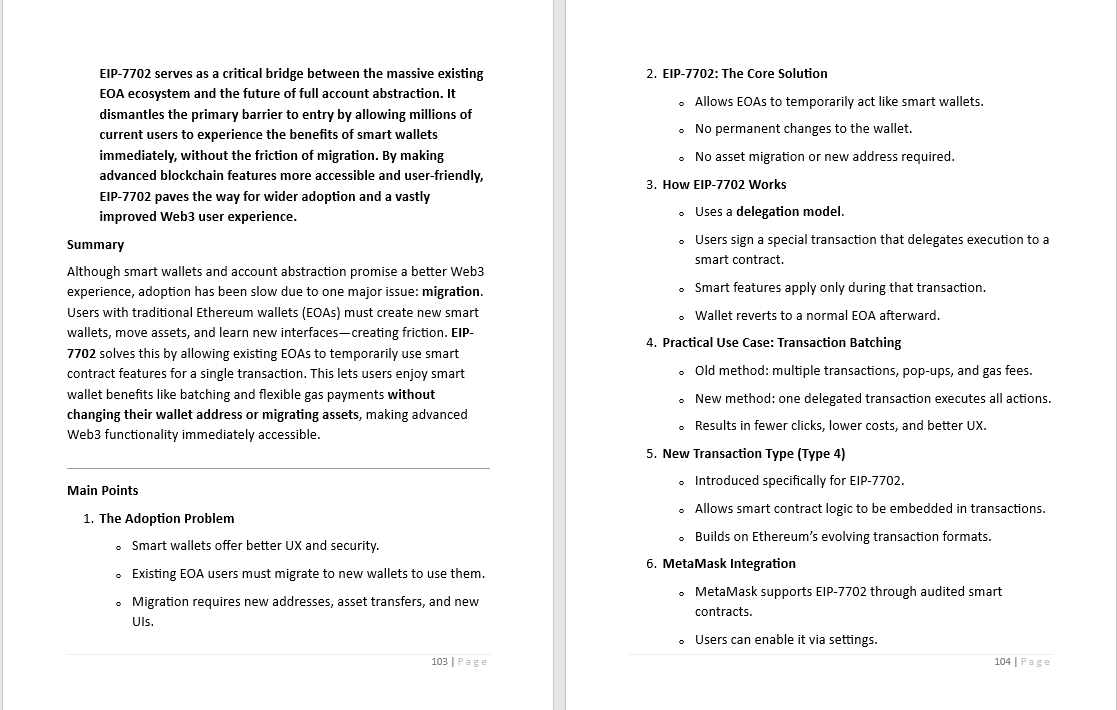
Traditional EOAs, controlled solely by private keys, lack the programmability of smart contracts. They execute single, straightforward transactions, limiting automation. EIP-7702 changes this by introducing transaction type 0x04, allowing an EOA to sign an authorization that delegates execution to a smart contract code for that transaction alone. Post-execution, the EOA reverts to its original state, preserving address continuity and transaction history. This temporary smart wallet functionality means no migration hassles, no new deployments, just seamless enhancement.
Decoding the Delegation Process in EIP-7702
The core innovation lies in the authorization mechanism. An EOA signs a message specifying a smart contract address and optional parameters, effectively setting its code temporarily. During validation, the network treats the EOA as if it were that contract, enabling batched operations, gas sponsorship, or custom logic like session key validations. For developers building AI agents, this is gold: agents can now orchestrate complex workflows, such as swapping tokens across DEXes or claiming yields, all under the user's EOA umbrella.
Consider the security model. Delegation is nonce-aware and chain-specific, reducing replay risks. Yet, as reports from 2025 highlight, phishing exploits have targeted these authorizations, tricking users into signing malicious delegations. My take? This upgrade amplifies power but demands vigilance; it's not a free lunch, but with disciplined implementation, it outpaces legacy account abstraction like EIP-4337 in user-friendliness.

AI Agent EOA Activation: Unlocking Autonomous On-Chain Actions
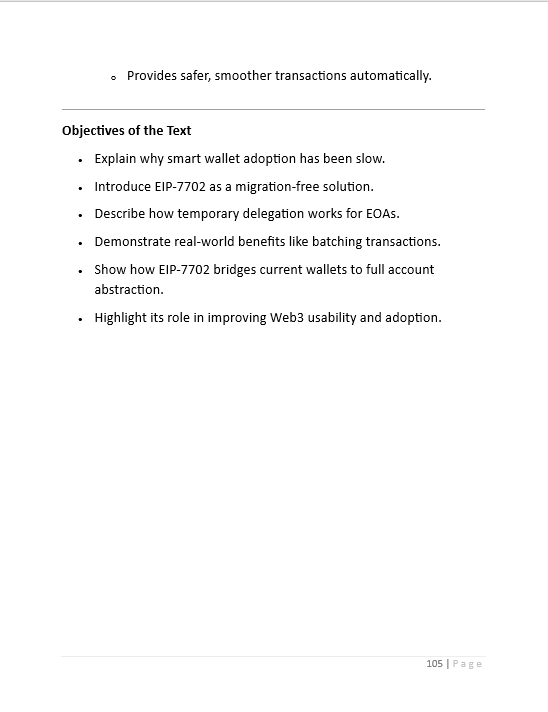
AI agents thrive on autonomy, and EIP-7702 supercharges this for blockchain tasks. Picture a smart-wallet AI agent using session keys paired with EIP-7702: it requests temporary permissions via delegation, executes rebalancing across multi-asset portfolios, then relinquishes control. No permanent code deployment means lower gas costs and faster onboarding. Platforms like SmartAgentKeys. com are already leveraging this for scalable, keyless interactions.
Navigating Security Pitfalls in Temporary Smart Contract Activation
While transformative, EIP-7702 isn't without thorns. Halborn and Blockaid analyses underscore risks: malicious contracts could drain funds if delegated carelessly. Phishing surged post-Pectra, with attackers mimicking legit dApps to harvest signatures. Developers must enforce signature validation, use whitelisted contracts, and integrate tools like Blockaid for real-time scanning.
Opinion: Ethereum's push here is bold, prioritizing UX over absolute safety nets, but it forces maturity on users and builders. Pair it with session keys for granular permissions - approve swaps only, not withdrawals - and you mitigate most vectors. For AI agents, embed intent-based verification; let the agent propose, user authorize narrowly. This balance ensures temporary smart wallet features empower rather than endanger.
Early adopters report 30-50% efficiency gains in workflows, but only with robust guards. As we integrate this into production smart wallets, the focus shifts to education: teach users to scrutinize delegations like they do seed phrases.
Integrating EIP-7702 into AI-driven smart wallets demands a structured approach. Developers start by crafting authorization messages that specify the delegate contract and nonce. Libraries like ethers. js now support type 0x04 transactions, simplifying frontend integration. For AI agents, the workflow begins with intent detection: the agent analyzes market data, proposes a delegation for rebalancing, and awaits user sign-off via a secure interface.
Best Practices for Secure AI Agent EOA Activation
Adhering to these practices minimizes exposure. First, scope delegations tightly; use session keys to limit actions to specific functions, like token swaps under predefined thresholds. Second, implement multi-sig confirmations for high-value operations, blending EIP-7702's speed with layered security. From a portfolio manager's lens, this setup mirrors risk controls in traditional finance: automate the routine, safeguard the critical.
Testing on testnets reveals nuances. QuickNode guides highlight replay protection via chain ID inclusion, vital for cross-chain AI agents. Halborn warns of contract storage slots; ensure delegates don't persist state unexpectedly. In my experience managing multi-asset portfolios, such diligence prevents the equivalent of fat-finger trades, preserving capital during volatile swings.
Real-World Applications: Portfolio Rebalancing and Beyond
Where EIP-7702 shines brightest is in autonomous portfolio management. An AI agent, powered by SmartAgentKeys. com, monitors on-chain signals: ETH dips below a volatility threshold, BTC dominance rises. It delegates to a rebalancer contract via the user's EOA, batching sells and buys in one gas-efficient tx. Gas sponsorship from protocols like Circle's USDC flows covers costs, making it viable for retail users.
This EIP-7702 EOA upgrade extends to DeFi yield optimization. Agents rotate positions across lending markets or liquidity pools without address changes, tracking performance under the same EOA history. Businesses benefit too: automate payroll in stablecoins or compliance checks, all keyless and scalable. Early metrics from OneBalance docs show transaction throughput doubling, with failure rates under 1% when paired with proper validation.
Challenges persist, particularly in user education. Many still conflate EOAs with invulnerability, overlooking delegation risks. Platforms must embed simulations: preview what a signature authorizes, much like transaction simulators in MetaMask. Opinion: Ethereum nailed usability here, but success hinges on ecosystem tools evolving faster than exploits.
Looking ahead, EIP-7702 sets the stage for hybrid accounts in Web3. Combine it with EIP-4337 bundlers for relayer networks tailored to AI workloads, and you unlock true intent-centric blockchains. For developers and enthusiasts, this means prototyping agents that evolve with market conditions, rebalancing dynamically without human prompts.
SmartAgentKeys. com exemplifies this vision, fusing EIP-7702 delegations with session keys for granular, temporary permissions. Users retain EOA control while agents handle the heavy lifting: cross-DEX arbitrage, NFT fractionalization, even DAO voting automation. The result? A fluid experience where temporary smart wallet logic amplifies human intent, not replaces it.
Efficiency gains compound over time. What starts as 30-50% workflow improvements scales to full autonomy in mature setups. As adoption grows post-Pectra, expect AI agents to redefine on-chain interactions, turning EOAs from static vaults into dynamic engines of disciplined growth. Diversification with discipline, now on autopilot.




No comments yet. Be the first to share your thoughts!