
In the evolving landscape of Web3 by 2026, Ethereum's Pectra upgrade has catalyzed a seismic shift through EIP-7702, empowering Externally Owned Accounts (EOAs) to temporarily delegate control to smart contract accounts. This innovation, rolled out in May 2025, has recorded over 11,000 authorizations within its first week, underscoring a surge in smart wallet adoption. Developers and businesses now harness features like transaction batching, gas sponsorship, and session keys without forcing users to abandon familiar EOAs. Yet, this power introduces complexities; reports highlight significant losses from authorization vulnerabilities, prompting security firms like Blockaid to deploy simulation tools for safer integration.
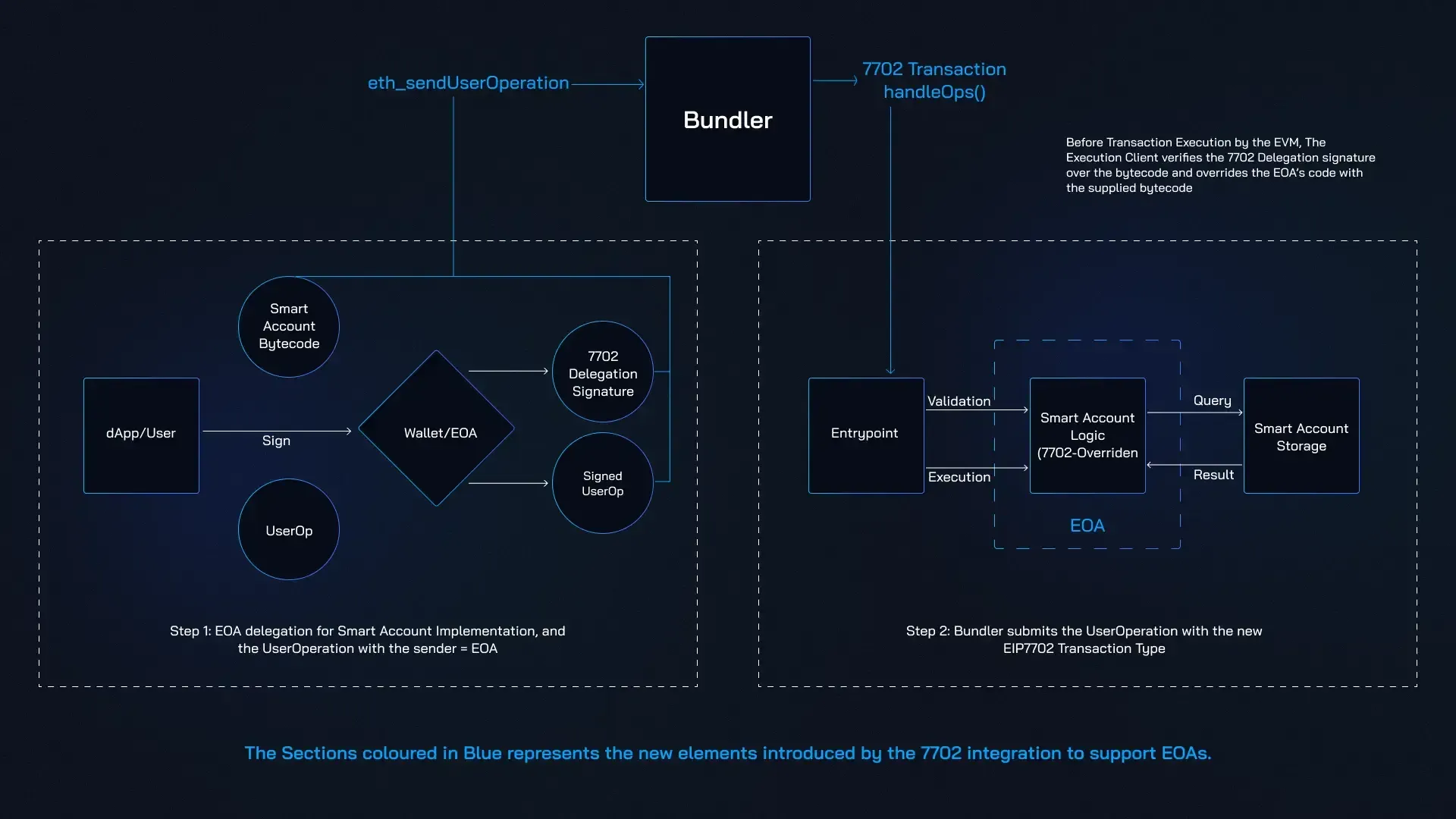
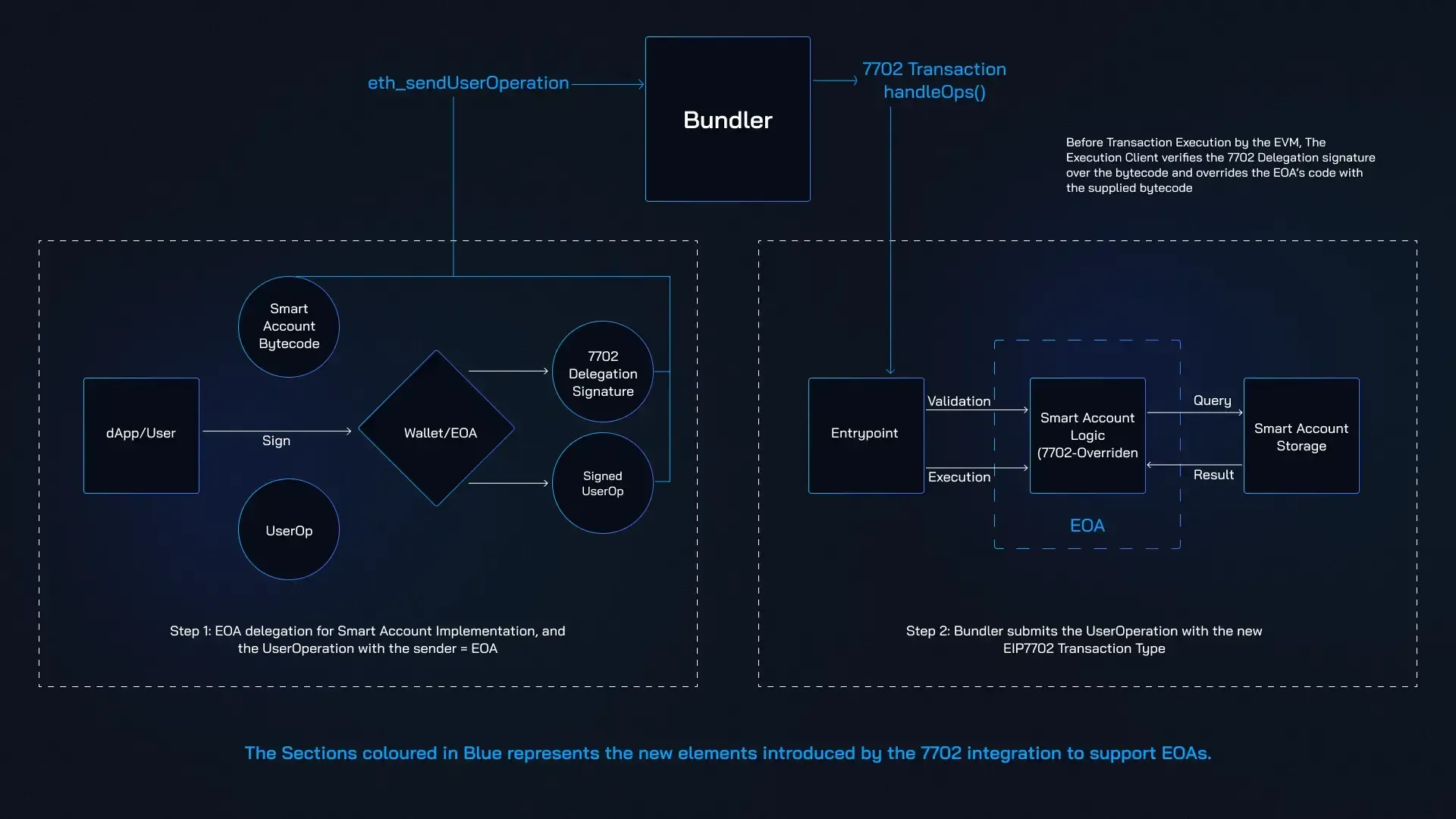
EIP-7702 bridges the gap between legacy EOAs and full account abstraction (AA), allowing temporary code and storage execution. Unlike ERC-4337's bundler-dependent model, EIP-7702 enables native delegation directly via transaction fields, slashing migration friction. Wallet providers such as Ambire have swiftly integrated it, letting users activate smart functionalities in existing setups. This precision upgrade aligns perfectly with smart wallet future-proof strategies, reducing operational costs for dApps by up to 50%, as noted in early analyses from OKX Wallet.
Decoding EIP-7702's Core Mechanics for dApp Resilience
At its heart, EIP-7702 equips EOAs with a delegation mechanism: users sign a transaction authorizing a smart contract to act on their behalf for a defined scope. This unlocks gasless transactions, spending caps, and single-click actions, all while preserving EOA control. Data from The Block confirms this has propelled smart wallet usage, with infrastructure launches from Etherspot and Safe Docs emphasizing its role in AA evolution. I view this as a pivotal enabler for EIP-7702 dApp integration, where decentralized applications gain scalability without UX trade-offs. Consider UXLINK's pivot from ERC-4337; their adoption signals confidence in EIP-7702's efficiency for one-account abstraction architectures.
Account abstraction seeks to replace externally owned accounts with smart contract accounts entirely, but EIP-7702 offers a pragmatic halfway house.
Security remains paramount. While QuillAudits hails it as a new AA era, aicoin. com reports underscore vulnerabilities in poorly simulated flows. Blockaid's infrastructure now detects these threats, simulating 7702 transactions accurately. In my decade analyzing precise patterns, much like Fibonacci retracements in forex, EIP-7702 demands meticulous execution to avoid overextension risks.
AI Agents: The Intelligent Layer for Session Key Automation
Enter AI agents in 2026's smart wallets, leveraging EIP-7702 for autonomous task execution. Platforms like SmartAgentKeys. com pioneer this by combining EIP-7702 with session keys, granting temporary permissions for AI-driven workflows. Imagine agents automating dApp interactions: batching trades, sponsoring gas via relayers, or enforcing programmable permissions. Rhinestone docs highlight how these AI agents 2026 enhance security through predictive threat modeling, countering the vulnerabilities plaguing early adopters.
Session keys shine here, allowing granular control; an AI agent might execute swing setups on DEXs with predefined limits, mirroring my harmonic pattern strategies but decentralized. This synergy future-proofs dApps against user friction, with LimeChain noting EIP-7702's push toward universal smart accounts. Turnkey's analysis reveals growing adoption, positioning EIP-7702 as superior to ERC-4337 for native Ethereum chains.
Strategic Integrations Driving dApp Scalability
For developers eyeing 2026 dominance, EIP-7702 dApp integration mandates hybrid architectures. GitHub's Awesome EIP-7702 list curates tools for standards compliance, from QuillAudits' audits to Reza Hedayati's breakdowns on LinkedIn. ACCESS Newswire details UX boosts: single-click actions via session keys reduce drop-offs, vital for high-volume dApps. My take? Neglect this, and your app lags; embrace it with AI agents, and you command unparalleled efficiency. Ambire's community calls recap seamless EOA upgrades, while OKX Wallet projects cost savings accelerating contract wallet transitions.
Hybrid setups mean layering EIP-7702 delegations atop existing EOAs, with AI agents handling the orchestration. Platforms like SmartAgentKeys. com exemplify this, using session keys for AI-driven automation in decentralized exchanges. Developers can deploy agents that monitor market patterns, execute trades within spending caps, and revoke permissions post-task, minimizing exposure. This mirrors my forex precision: identify harmonic setups, set Fibonacci-based limits, then let automation execute flawlessly.
Overcoming Adoption Hurdles: Security and Simulation
Despite the hype, EIP-7702's rollout exposed friction points. Aicoin. com documented substantial losses from flawed authorizations, where attackers exploited misconfigured delegations. Blockaid counters this with simulation infrastructure, replicating 7702 flows to flag anomalies before deployment. Their tools detect novel threats, ensuring dApps integrate safely. Pair this with AI agents' predictive analytics, and vulnerabilities shrink; agents can preemptively adjust session keys based on real-time risk scores. In 2026, this duo defines smart wallet future-proof resilience, transforming potential pitfalls into competitive edges.
Key EIP-7702 + AI Agent Benefits
- Transaction Batching: Bundles multiple actions into one tx, reducing on-chain interactions. EIP-7702 enables EOAs to delegate to smart contracts for this, with AI agents automating batch optimization (The Block).
- Gas Sponsorship: Third parties cover gas fees via paymasters. EIP-7702 supports gasless txs for EOAs, enhanced by AI agents for dynamic sponsorship decisions (Ambire).
- Session Key Automation: Temporary keys for delegated actions without full control. EIP-7702 unlocks session keys, with AI managing permissions and revocations securely (Rhinestone).
- Reduced Costs: Cuts operational expenses by over 50% for dApps via efficient AA. EIP-7702 minimizes migration needs, AI agents further optimize tx flows (OKX Wallet).
- Enhanced Security: Programmable permissions and threat detection. Despite vulnerabilities, tools like Blockaid simulate EIP-7702 flows; AI agents add automated monitoring (Blockaid).
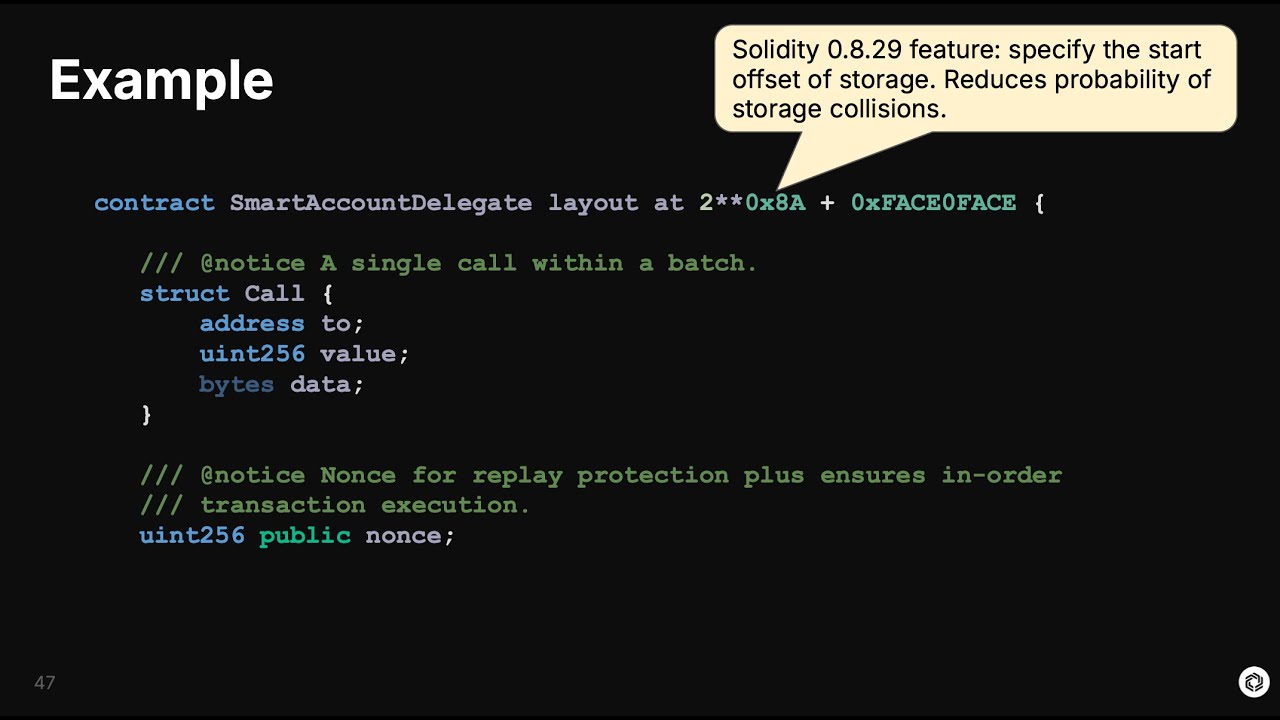
Adoption metrics paint a clear trajectory. Post-Pectra, smart wallet interactions spiked, with Ambire users activating features sans migration. Etherspot's infrastructure supports this scale, while Safe Docs clarifies code-storage dynamics. For dApp builders, the math is compelling: OKX Wallet's 50% cost reduction forecast materializes through fewer user interventions and streamlined ops.
Real-World AI Agent Deployments in 2026
UXLINK's ERC-4337 to EIP-7702 shift powers their one-account vision, integrating AI for seamless social-fi flows. Rhinestone's smart EOAs enable programmable permissions, where agents manage DeFi yields autonomously. Consider a DEX swing trader: an AI agent, authorized via EIP-7702, uses session keys to batch entries at harmonic confluences, sponsors gas, and exits at retracement levels. This isn't speculation; Turnkey's adoption data shows EIP-7702 outpacing ERC-4337 in native efficiency. QuillAudits and LimeChain affirm its role in phasing out pure EOAs, with GitHub resources accelerating builds.
EIP-7702 upgrades EOAs to wield smart logic temporarily, unlocking gasless ops and caps without upheaval.
Challenges persist, yet solutions evolve. Reza Hedayati's insights stress foundational AA gains, while Blockaid fortifies against exploits. My pattern-honed lens spots the parallel: just as overbought forex pairs retrace, overhyped EIP-7702 integrations correct via rigorous testing. Developers prioritizing simulation and AI oversight thrive.
Looking to 2026's horizon, EIP-7702 dApp integration fused with AI agents 2026 redefines Web3 scalability. Smart wallets evolve from passive holders to proactive engines, executing complex workflows with surgical precision. Platforms like SmartAgentKeys. com lead, blending EIP-7702 standards, session keys, and AI for keyless, autonomous interactions. Businesses slashing costs, users enjoying frictionless UX, developers wielding Awesome-listed tools: this ecosystem matures. The Pectra pivot proves pivotal; those adapting now command tomorrow's decentralized frontier, where intelligence meets abstraction in perfect harmony.




No comments yet. Be the first to share your thoughts!