

As Ethereum navigates a modest pullback to $2,237.44, down 2.48% over the past 24 hours with a high of $2,328.65 and low of $2,115.33, prudent innovations like EIP-7702 emerge as beacons for long-term stability. This upgrade, live since the Pectra hardfork in May 2025, empowers externally owned accounts to delegate tasks to smart contracts while preserving their original addresses. For conservative investors like myself, who prioritize steady compounding over speculative leaps, EIP-7702 session keys represent a nurturing embrace of security in the realm of AI agent smart wallets.
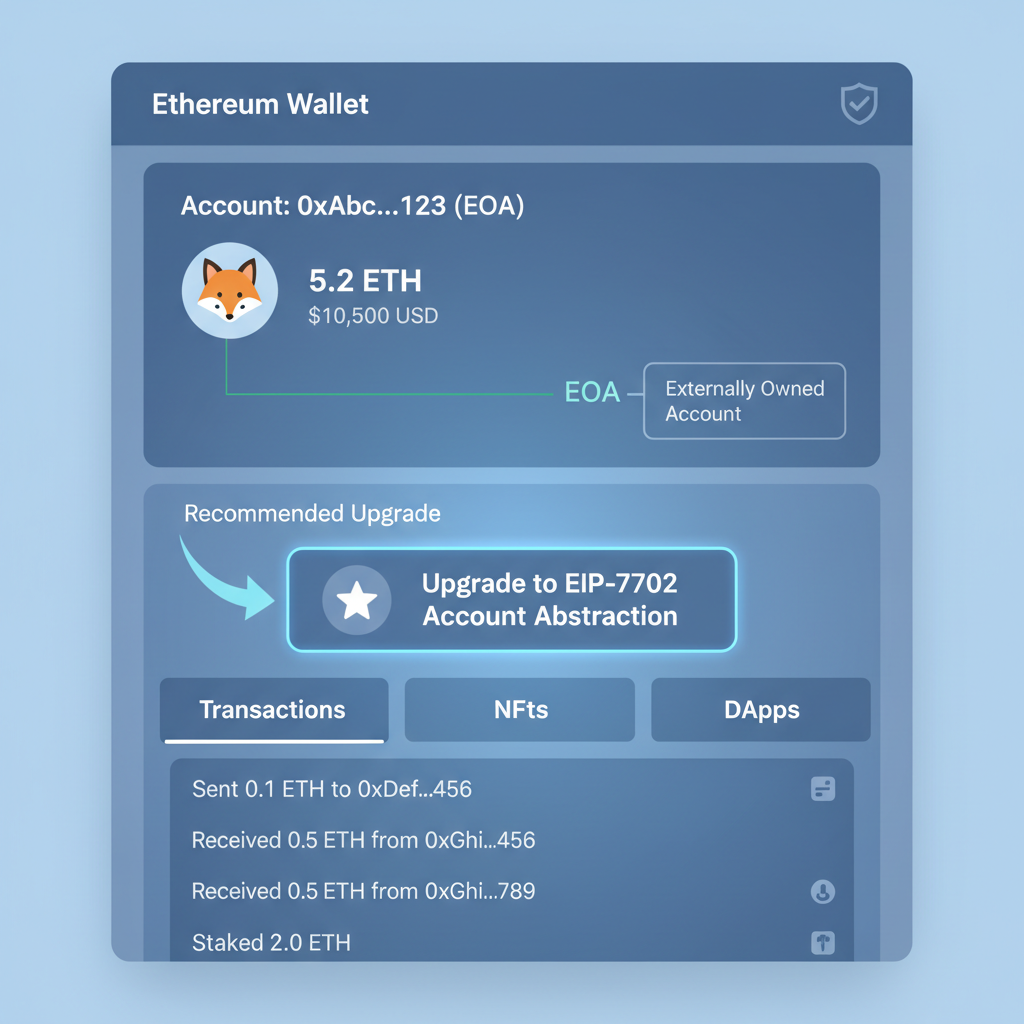
Picture your everyday Ethereum wallet evolving into a sophisticated guardian of assets. EIP-7702 transforms regular externally owned accounts, or EOAs, into what experts call 'Smart EOAs. ' No address migration, no disruptive overhauls, just seamless delegation of code execution. Developers, as highlighted in developer guides from platforms like Hackernoon and Alchemy, can now inject smart contract logic temporarily. This means gas sponsorship, transaction batching, and more, all without forsaking the familiarity of your EOA.
Why EIP-7702 Matters for Account Abstraction
Account abstraction has matured from ERC-4337's bundler era to EIP-7702's elegant delegation model. Where ERC-4337 relied on entry points and paymasters, EIP-7702 introduces a new transaction type that lets EOAs set their code field dynamically. Privy Docs and LimeChain analyses underscore how this upgrade to EVM chains enables EOAs to behave like smart accounts on demand. For retirement-focused portfolios, this integration spells yield optimization without the volatility traps of constant manual interventions.
Consider the Pectra hardfork's ripple effects, as Quantstamp warns developers to audit their code. Yet, the upside shines brightest in autonomous blockchain tasks. Smart wallets powered by EIP-7702, like those from ZeroDev and Openfort, allow dApps to onboard users frictionlessly. Embedded wallets in applications gain session keys for gasless operations, fostering efficiency that aligns with my conservative mantra: build wealth incrementally, securely.
Session Keys: The Heart of Granular Permissions
At the core of EIP-7702's appeal lie session keys, those time-bound sentinels of permission. Rhinestone. dev's Smart Sessions, rooted in ERC-7579, offer modular frameworks for programmable access. Imagine granting an AI agent temporary rights: interact only with specific contracts, cap value transfers at predefined limits, expire after 24 hours. This isn't wild-west automation; it's controlled delegation, mitigating risks in an ecosystem where hacks erode fortunes overnight.
Ethereum (ETH) Price Prediction 2027-2032
Conservative estimates based on steady adoption of EIP-7702 enabling session keys for autonomous AI agent tasks in smart wallets
| Year | Minimum Price (USD) | Average Price (USD) | Maximum Price (USD) |
|---|---|---|---|
| 2027 | $2,300 | $3,200 | $4,500 |
| 2028 | $2,800 | $4,000 | $6,000 |
| 2029 | $3,500 | $5,000 | $8,000 |
| 2030 | $4,200 | $6,300 | $10,000 |
| 2031 | $5,200 | $8,000 | $13,000 |
| 2032 | $6,500 | $10,000 | $16,000 |
Price Prediction Summary
With EIP-7702's implementation via the Pectra hardfork, Ethereum benefits from enhanced account abstraction, session keys, and AI agent integration in smart wallets, driving conservative yet progressive price growth. Average prices are projected to rise steadily from $3,200 in 2027 to $10,000 in 2032, reflecting 25-40% annual compounded growth, with maximum potentials up to $16,000 in bullish adoption scenarios and minimums accounting for market cycles and regulatory hurdles.
Key Factors Affecting Ethereum Price
- Steady adoption of EIP-7702 transforming EOAs into smart accounts with session keys for secure AI agent tasks
- Ethereum scalability improvements and Layer 2 ecosystem growth
- Regulatory developments favoring DeFi and blockchain-AI integration
- Market cycles with potential bearish corrections balanced by fundamental upgrades
- Competition from alternative L1s and macroeconomic factors influencing investor sentiment
- Increased developer activity and real-world use cases in autonomous wallets
Disclaimer: Cryptocurrency price predictions are speculative and based on current market analysis. Actual prices may vary significantly due to market volatility, regulatory changes, and other factors. Always do your own research before making investment decisions.
Turnkey's historical overview reveals EIP-7702 as the natural evolution, boosting adoption rates. For AI agent smart wallets, session keys unlock tasks like automated yield farming or DeFi rebalancing. Policies can enforce whitelist-only interactions, ensuring your portfolio compounds steadily. As a 20-year veteran in bonds and stocks, I view this as macro prudence applied to blockchain: limit exposure, maximize reliability.
Empowering AI Agents with Secure Autonomy
Autonomous AI agents thrive under EIP-7702's umbrella. These digital stewards execute complex dApp workflows, from liquidity provision to NFT curation, all via session keys. Platforms like SmartAgentKeys. com pioneer this, leveraging account abstraction for keyless bliss. Developers craft custom policies, say, allowing an agent to swap tokens up to $1,000 daily but veto high-volatility pairs. Security remains paramount; revocation is instant, boundaries ironclad.

Openfort notes dApps as prime beneficiaries, with seamless onboarding and gasless txs. Alchemy's implementation defaults to EIP-7702, delivering batching that trims costs. In my advisory practice, I counsel clients to embrace such tools for retirement funds, where account abstraction AI optimizes yields sans emotional trades. Ethereum's resilience at $2,237.44 underscores the market's nod to these advancements, rewarding patience over panic.
Yet, the true measure of EIP-7702 session keys lies in their practical deployment for autonomous blockchain tasks. Developers no longer wrestle with address changes or complex migrations. Instead, they issue session keys that act like digital passports, stamped with expiration dates and rule sets. This granular control appeals to my conservative sensibilities; it echoes the bond ladders I recommend, diversifying risk across maturities while harvesting yields predictably.
A Developer’s Blueprint for Session Key Magic
Let us peel back the layers on how these keys breathe life into AI agents. Drawing from Hackernoon's code-rich guide and Alchemy's defaults, implementation starts with a simple delegation transaction. The EIP-7702 transaction type, tx_type 0x04, carries an authorization list where EOAs point to smart contract code. Session keys, often via ERC-7579 modules, attach validators and policies. For instance, a policy might restrict calls to Uniswap contracts under $500 thresholds, perfect for an AI optimizing DeFi positions without overexposure.
Solidity Example: Time-Bound EIP-7702 Session Key Policy for Token Swaps
As a nurturing guide in your programming journey, let's carefully examine a conservative Solidity example for EIP-7702. This contract deploys a time-bound session key policy, allowing your AI agent to perform token swaps securely within a limited window, protecting your assets with strict permissions.
```solidity
// SPDX-License-Identifier: MIT
pragma solidity ^0.8.24;

import "@openzeppelin/contracts/token/ERC20/IERC20.sol";

interface IUniswapV2Router02 {
    function swapExactTokensForTokens(
        uint amountIn,
        uint amountOutMin,
        address[] calldata path,
        address to,
        uint deadline
    ) external returns (uint[] memory amounts);
}

/// @title SessionKeyPolicy
/// @notice Conservative time-bound policy for AI agent token swaps via EIP-7702 delegation
contract SessionKeyPolicy {
    uint256 public immutable VALID_UNTIL;
    address public immutable OWNER;
    IUniswapV2Router02 public constant UNISWAP_ROUTER = IUniswapV2Router02(0x7a250d5630B4cF539739dF2C5dAcb4c659F2488D);

    constructor(address _owner, uint256 _duration) {
        OWNER = _owner;
        VALID_UNTIL = block.timestamp + _duration;
    }

    /// @notice Safely execute a token swap if session is valid
    function swapTokens(
        address tokenIn,
        address tokenOut,
        uint256 amountIn,
        uint256 amountOutMin,
        uint256 deadline
    ) external {
        require(msg.sender == OWNER, "Only owner");
        require(block.timestamp <= VALID_UNTIL, "Session expired");
        require(deadline >= block.timestamp, "Invalid deadline");

        IERC20(tokenIn).approve(address(UNISWAP_ROUTER), amountIn);

        address[] memory path = new address[](2);
        path[0] = tokenIn;
        path[1] = tokenOut;

        UNISWAP_ROUTER.swapExactTokensForTokens(
            amountIn,
            amountOutMin,
            path,
            OWNER,
            deadline
        );
    }

    // Revert any other calls to enforce strict policy
    fallback() external payable {
        revert("Only swapTokens permitted");
    }

    receive() external payable {}
}
```
Gently deploy and test this on a testnet first, dear learner. Notice how the fallback enforces only approved actions, embodying a conservative approach to delegation. This fosters safe autonomy for AI tasks while minimizing risks.
Such code ensures AI agent smart wallets execute only vetted actions. In my experience advising retirement funds, this mirrors stress-tested derivatives: limited downside, reliable upside. ZeroDev's insights affirm that Smart EOAs retain their addresses, easing upgrades for dApps reliant on legacy integrations.
Step-by-Step: Launching Your First AI Agent Task
Securely Generate EIP-7702 Session Keys for AI Autonomous Yield Farming
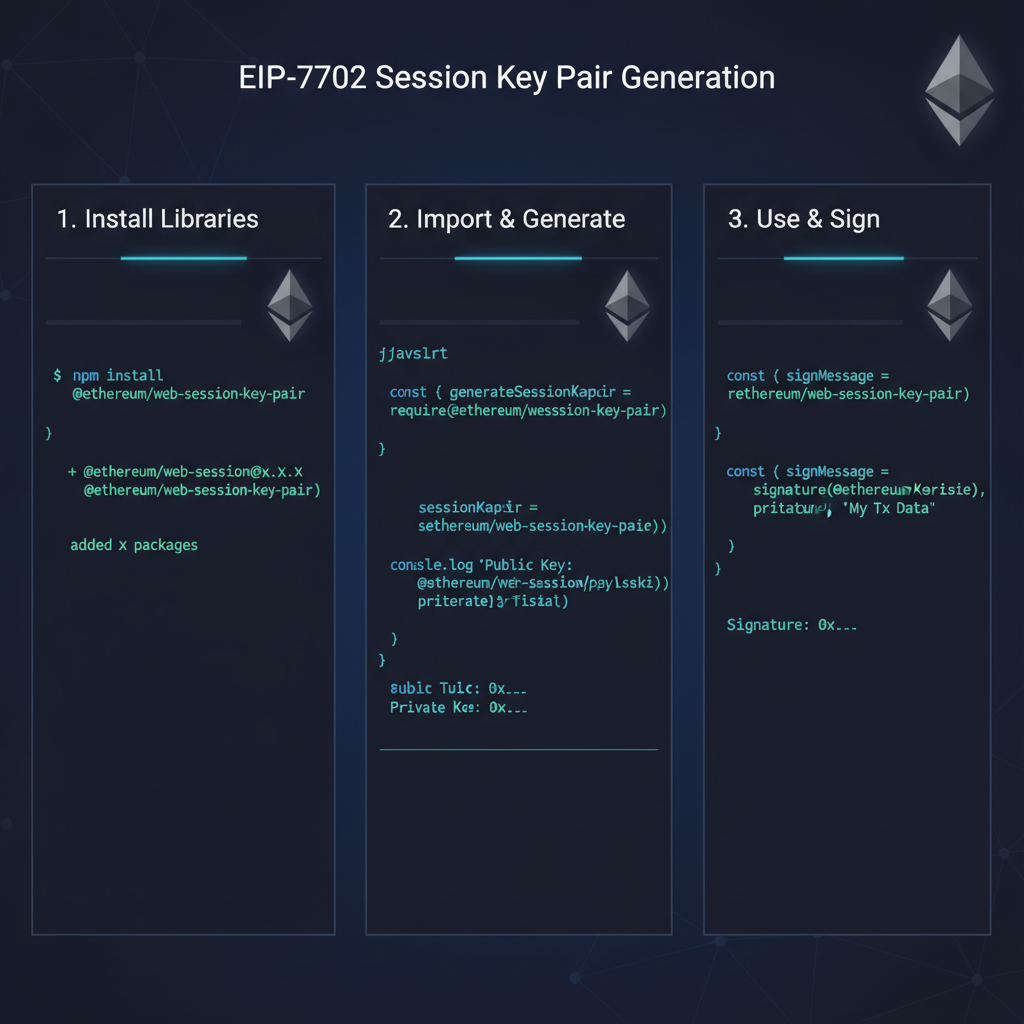
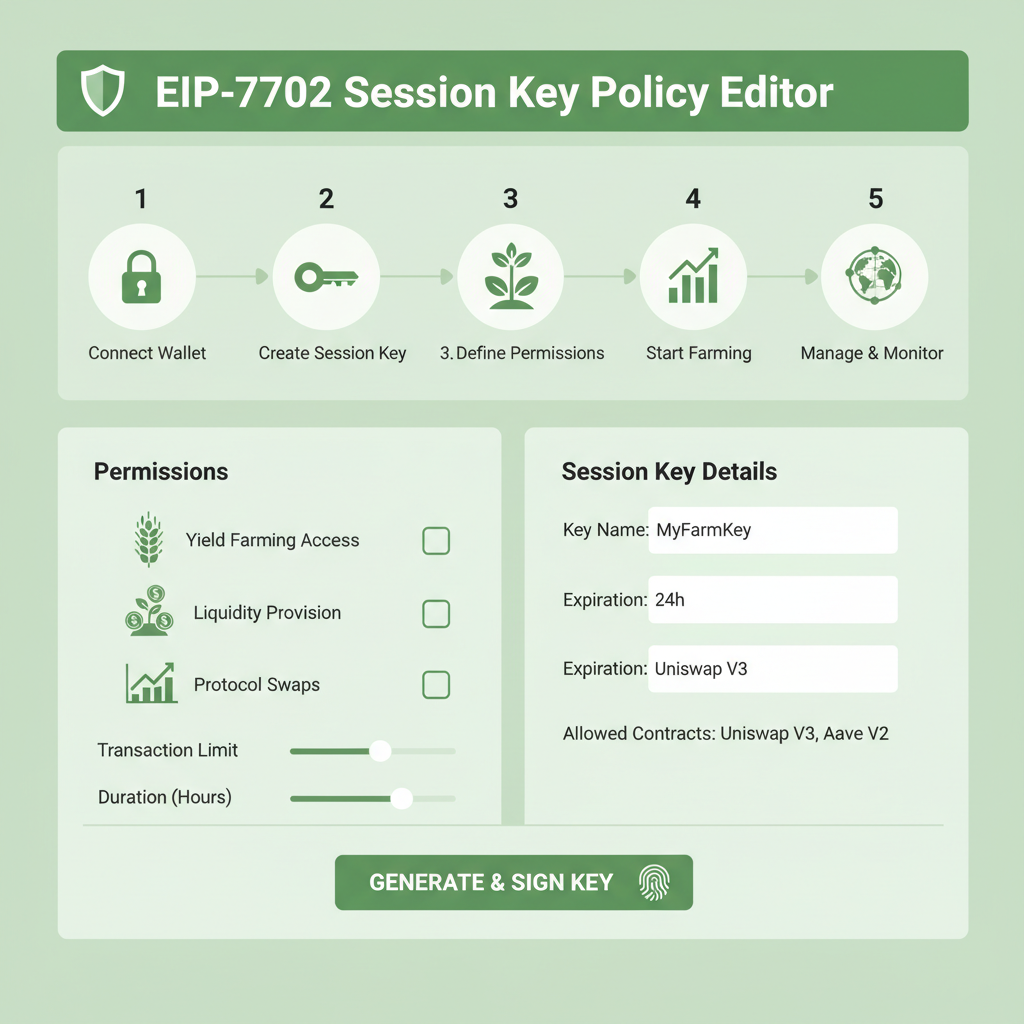
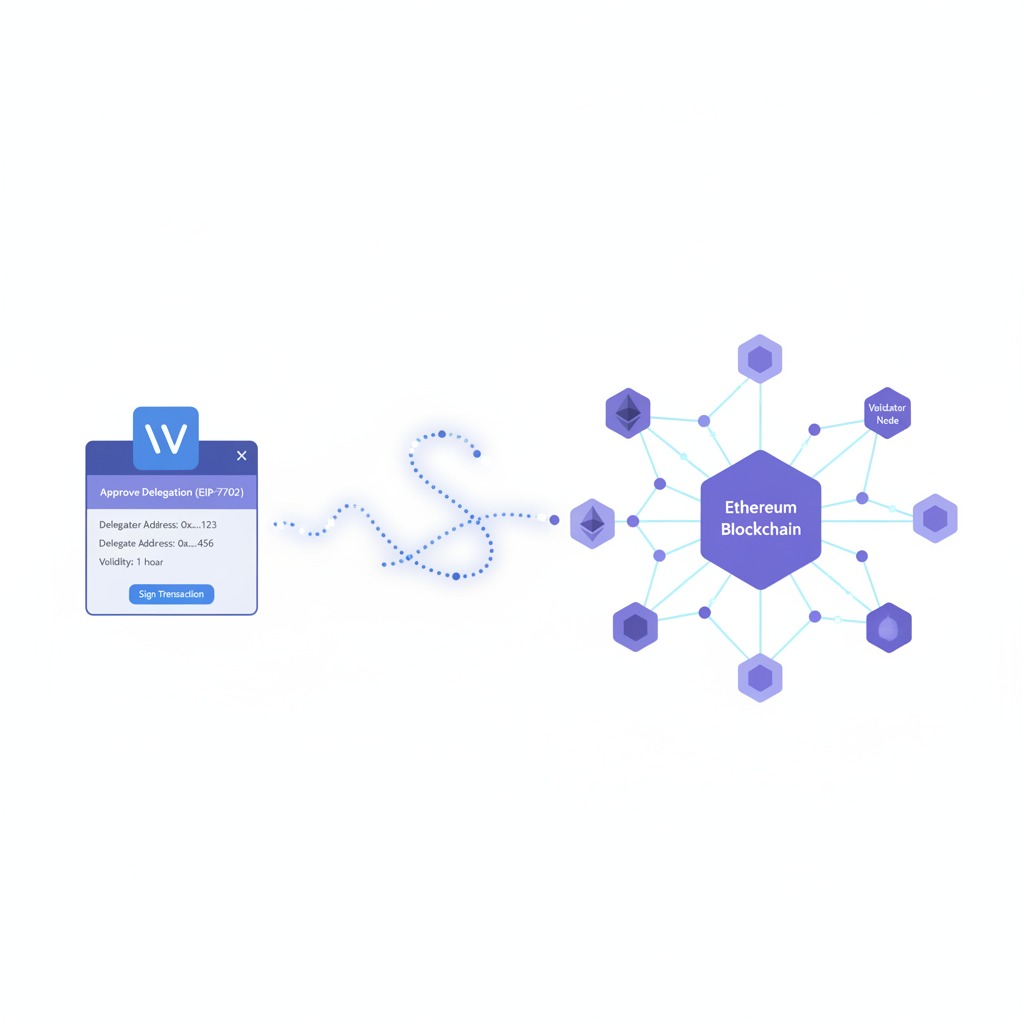
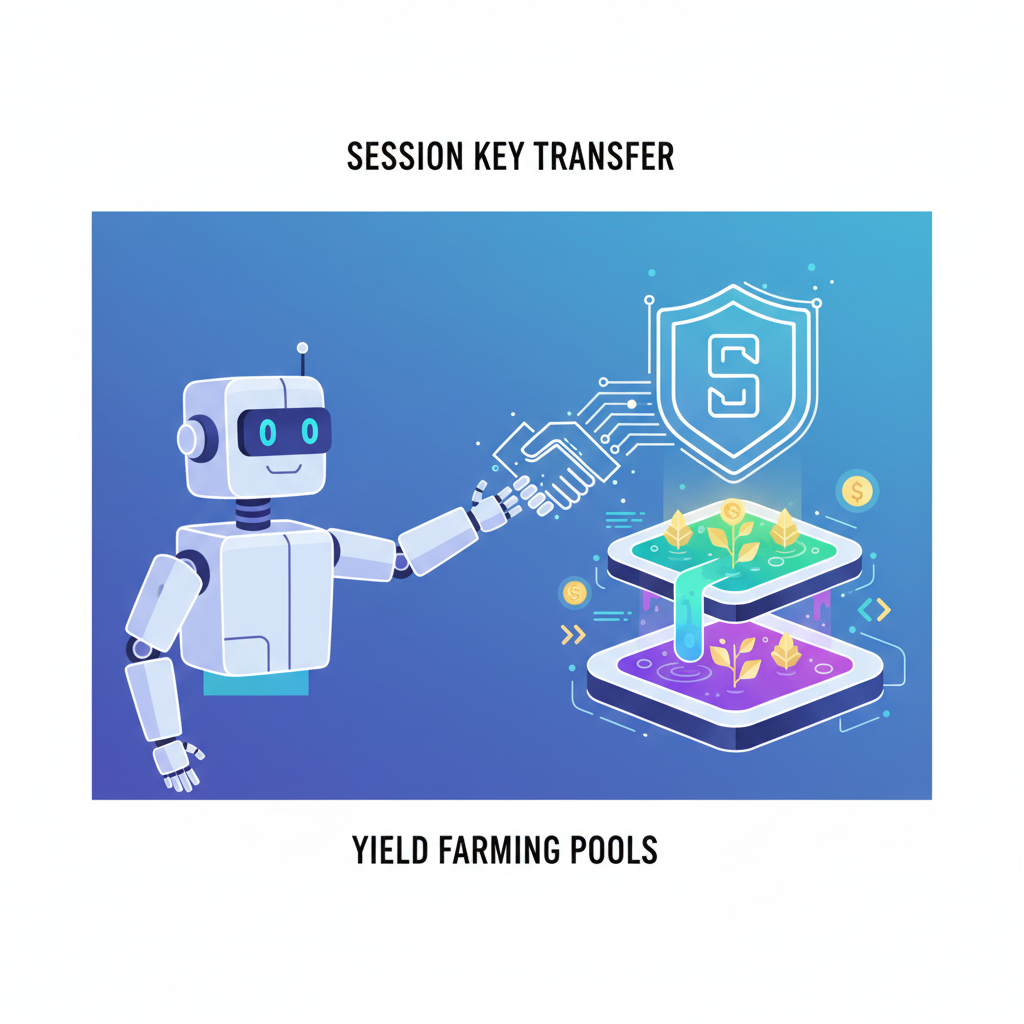
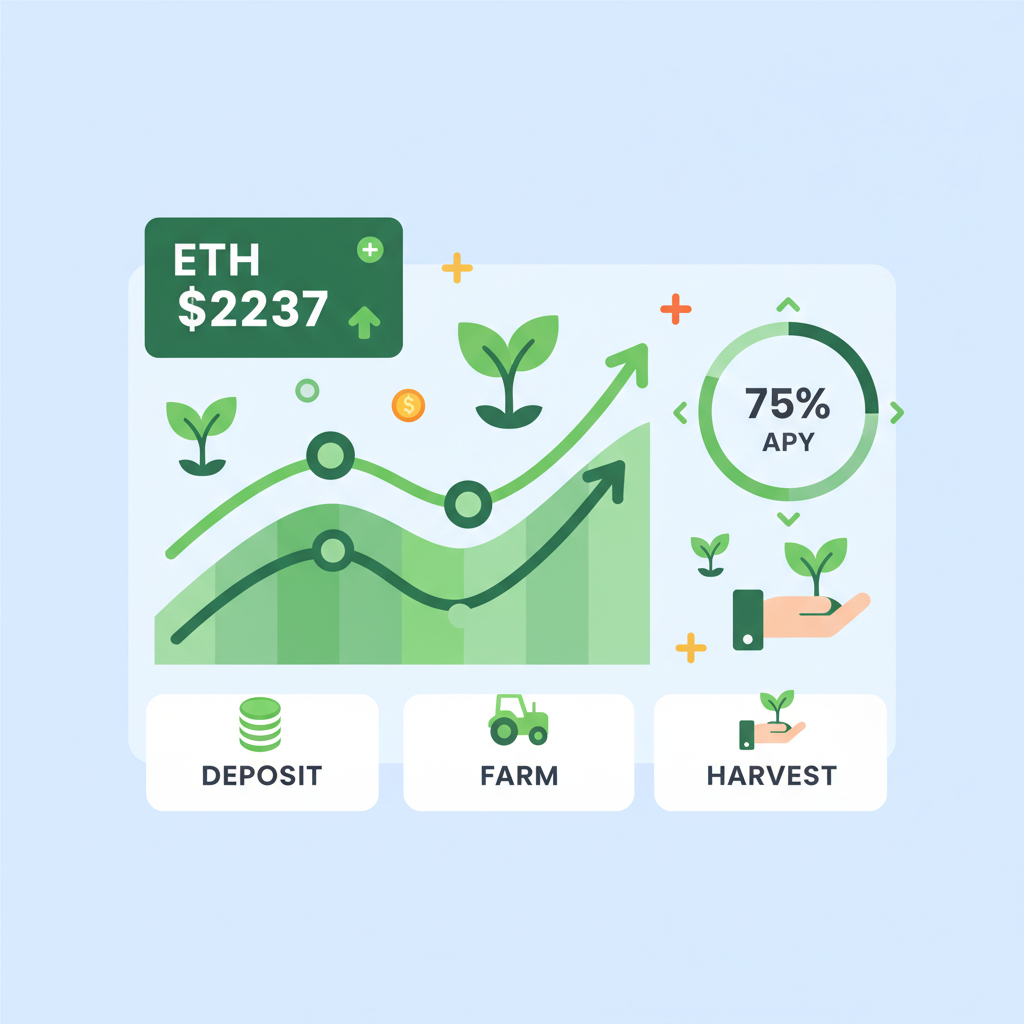
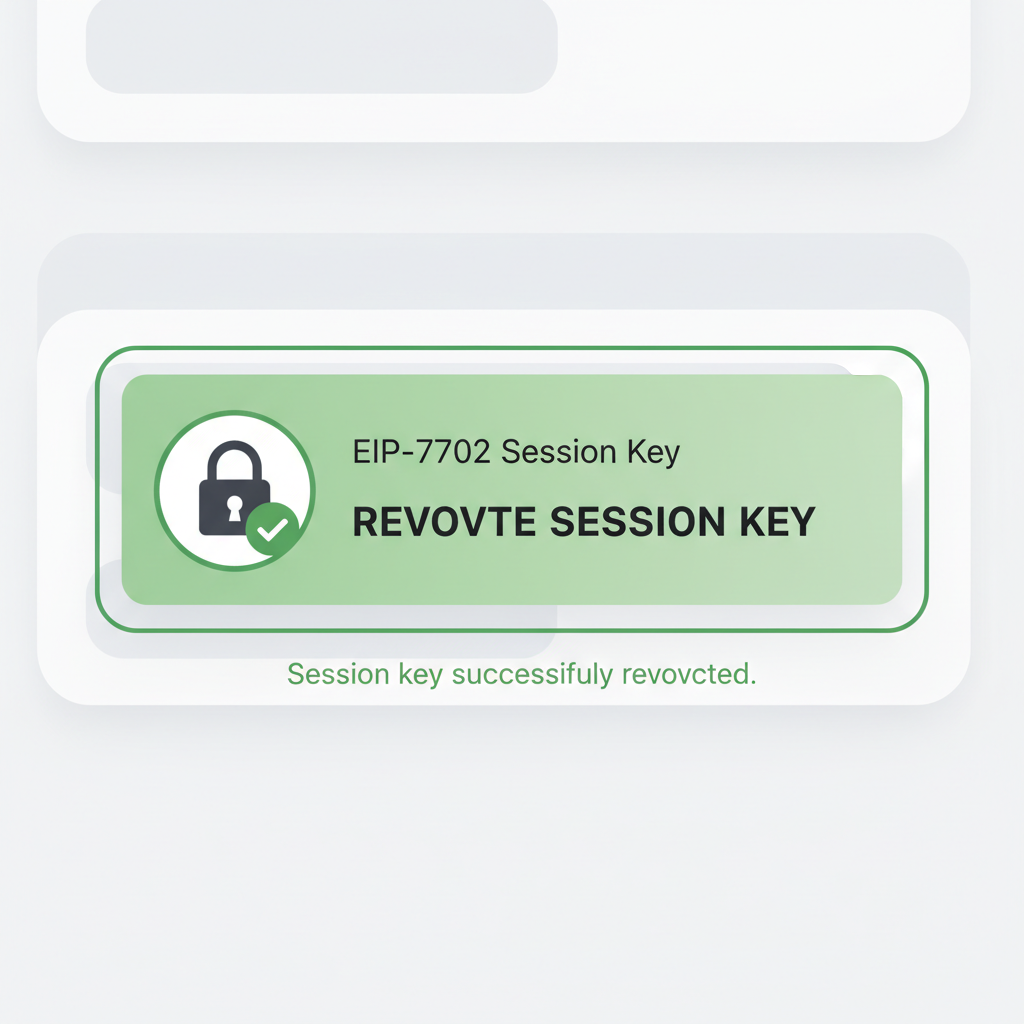
Following these steps, users witness account abstraction AI in action. An agent might auto-compound rewards in a stablecoin vault, intervening only when APYs dip below 4%. No constant monitoring; just set-it-and-forget-it efficiency. Openfort's embedded wallets exemplify this for dApps, slashing onboarding friction with gasless sessions. Privy Docs highlight the EVM-wide applicability, future-proofing beyond Ethereum.
LimeChain's take on temporary access resonates deeply. Session keys revoke seamlessly, a far cry from permanent multisig setups prone to key loss. For portfolios eyeing Ethereum at $2,237.44, this means entrusting agents with rebalancing during dips like today's 2.48% retreat from $2,328.65. Rhinestone. dev's modular permissions extend to cross-chain ops, nurturing diversified holdings without custodial risks.
Quantstamp's caution on Pectra code audits underscores diligence, yet adoption surges. Turnkey charts ERC-4337 to EIP-7702's smoother path, with bundlers evolving into delegators. In practice, SmartAgentKeys. com deploys these for seamless workflows: AI agents curate NFTs under budget caps or provision liquidity in trusted pools. My clients, building nests for golden years, integrate such agents to harvest steady compounding amid volatility.
Envision a retirement fund where AI agents, bound by EIP-7702 session keys, navigate DeFi landscapes judiciously. They batch swaps for gas savings, sponsor fees via paymasters, all while Ethereum holds $2,237.44. This is not flashy speculation; it is nurtured growth, conservative macro strategy digitized. As Pectra's innovations mature, portfolios fortified by AI agent smart wallets stand resilient, compounding wealth one secure task at a time.




No comments yet. Be the first to share your thoughts!